Skip to Content

Exclusive: Rock Band Unplugged Track List

McDonald's in North Carolina adds EV charging point


About a decade ago, a lone McDonald's in Phoenix, Arizona installed an electric car charging station in the hopes that one day consumers would be driving to its store on electrons in lieu of fossil fuels. A decade has since passed and most of us still pump dead dinos into our tanks, but at least one McDonald's franchise in Cary, North Carolina is taking another look at electric car charging points.

Ric Richards, the owner of the McDonald's in question, is reportedly going green on the new restaurant with eco-friendly materials and technologies, and that includes a ChargePoint charging station for plug-in vehicles. Click here for a quick primer on how the ChargePoint public charging station works.

It's probably going to be a little while longer before a large enough number of plug-in vehicles are on our roads to prompt widespread adoption of charging points, but at least one fast food restaurant will be ready. McDonald's in Sweden are also looking at offering outlets with Big Macs.

[Source: Hybrid Cars | Photo: smenzel CC 2.0]

Detroit Electric update: can the all-electric car with no connection to Detroit succeed?


A mix of good and bad news about the Detroit Electric revival story. The good news is that the brand remains alive and sending messages of solid partnership between Malaysian company Proton and European investors. Automotive News believes that the brand would have a large following among European and Asian customers for its all-electric vehicles. However, problems might arise in the U.S. when the company's EVs - a $25,000 model with a 110-mile range and a 200-mile version for $33,000 - go on sale here. The problem is that the Detroit Electrics will have nothing to do with Detroit except the name: the cars will be built in Malaysia, a fact that might be a problem for certain buyers. Also, the U.S. Patent Office has refused Detroit Electric's request for a trademark thus far because the company doesn't have any connection to Detroit. This could be a severe conflict with Detroit-based companies that already produce EVs: Ford, GM and even small companies such as Detroit Electric Vehicles LLC, which sells electric car kits and converts vehicles from gasoline to electric engines.

[Source: Automotive News (subs. req'd)]

Aston Martin Cygnet to offer "no compromises" luxury interior


Toyota iQ-based Aston Martin Cygnet concept - Click above to enlarge

We're still not sure what to think about Aston Martin's foray into microcar territory with its Cygnet concept, which is based heavily on the diminutive Toyota iQ. In reality, the supercar-spec front fascia treatment doesn't look all that bad when applied to the Japanese runabout, but there are legitimate concerns that the mere presence of the Cygnet in Aston's lineup will severely damage the brand's good reputation among petrolheads. Perhaps in an effort to appease the critics, Aston Martin chief Dr. Ulrich Bez covered his bases when talking to Auto Express:
Until now, small cars offered a message that people are buying something cheap. The Cygnet will show that small cars can also make a statement. It will be an intelligent purchase for people concerned about the environment, but who also want to enjoy all the luxury associated with a premium brand such as Aston Martin.
Chief among the upgrades Aston Martin plans to make to the basic iQ platform will be an interior swathed in the finest leathers, wood trims and carbon fiber. Sounds nice, but we still question whether the effort will seem disingenuous in light of the Cygnet's plebeian roots.

[Source: Auto Express]

Renault Z.E. electric car makes its mark at Goodwood


Renault's Z.E. (Zero Emission) Concept - Click above for high-res image gallery

While Porsche was pushing runners to previously-unknown heights, Renault participated in the Goodwood Festival of Speed with something a bit more appropriate. The company's quirky all-electric concept, the Z.E., was on hand along with the Dauphine, an electric Renault from 1959. While the museum-piece Dauphine took it easy on the display stand (see here), the Z.E. went for a spin on the hillclimb route. Renault PR thought this was just the best thing ever, as their release announcing the drive concludes:

At one point on the route, close to Goodwood House, the outlandish Z.E. Concept, replete with its Acid Green windows and roof-mounted solar panels, joined a Jaguar XJ13 and Aston Martin DBR1 for arguably one of the most surreal car parade sights ever seen at the Goodwood Festival.

We're just happy to see the company is willing to put the little neon greenhouse on public display with bona fide classics. Seems like they're confident in the all-electric route they're taking.


[Source: Renault]

Read more →
What a car feels and sounds like: GM refining Volt driving experience


2011 Chevy Volt - Click above for high-res gallery

We don't have to tell you how important the Chevy Volt is to General Motors. The plug-in electric car's success or failure is likely to be seen as a crucial indicator of GM's post-bankruptcy prospects in the eyes of many followers. This being the case, it's not surprising that automaker is practically throwing everything it's got at the project. According to Chief Engineer Andrew Farah, the Volt team is currently working on getting the sound and feel of the driving experience just right. Speaking to Automotive News, Farah said:
The engine, not being directly connected to the foot, is one of the things we continue to tune. We don't want it to be discomforting to people. There is an expectation of what happens when you put your accelerator to the floor in the way the car sounds and feels. We've got the feel. We've got the feel of a sports car. The sound part and the way the engine plays into that perception is one of the areas we have to work on.
Clearly, creating an electric car with mass-market appeal isn't as simple as bolting an electric motor and a bunch of batteries into an existing chassis. People have come to expect certain things to happen as an automobile is driven, and GM needs to find the right compromise between zero-emissions technology and time-honored driving dynamics. Further complicating the issue is the tremendous weight of the car's T-shaped battery pack. Farah explains:
Here's the thing to remember: When you put the battery in, it actually lowers the center of gravity of the car. There are a thousand reasons why heavy is bad, but a few why it is good. And so we are getting those advantages of the good heavy, and the disadvantages we are managing.


[Source: Automotive News - sub. req'd]

Volkswagen Golf BlueMotion detailed, available for order in UK


2010 VW Golf - Click above for high-res image gallery

Volkswagen is rounding out its new sixth-generation Golf model in the UK with the official introduction of its diesel models and BlueMotion variant. All three new VeeDubs will be powered by a 1.6-liter turbocharged diesel engine, and the BlueMotion model achieves a miserly 68.9 mpg on the combined cycle (57 mpg U.S.) and 107 g/km of CO2. That makes this new BlueMotion the cleanest and most fuel efficient Golf ever produced, no doubt assisted by its standard stop/start system, lowered ride height, low-resistance tires and aerodynamic enhancements.

The least expensive Golf TDI gets a 90-horsepower version of the 1.6 TDI that manages 62.8 mpg on the combined cycle (52 mpg U.S.) while producing 118 g/km of carbon dioxide. Move up the ladder one notch and you'll get a 105-horsepower mill that matches the fuel mileage of its less powerful sibling and is available with an optional seven-speed DSG gearbox.

By the time the Golf BlueMotion finally starts hitting dealers in September, Volkswagen is expected to have an even more efficient version ready to go that should lower carbon emissions down to 99 g/km with a UK combined fuel efficiency rating of over 75 mpg. Click past the break for the official press release.

[Source: Volkswagen]

Read more →
Columnist: hybrid growth in the near-term will benefit ... lead-acid battery makers?


2010 Mercury Milan Hybrid - Click above for high-res image gallery

Even though demand for hybrid vehicles is expected to grow like mushrooms after a summer rain in the coming years, there's a big problem looming, says John Peterson, a writer for investment site Seeking Alpha. Peterson has crunched some numbers and done some reading and discovered that the ingredients for a potential hybrid production slowdown are coming together. Those ingredients include: lack of advanced battery production capacity, increasing demand but no increase in supply of some rare earth metals needed to make NiMH batteries, and a slight undercounting of hybrid vehicle demand. In short, not everyone who wants a hybrid will be able to get one, and this could benefit, get this, lead acid battery makers.

With massive amounts of li-ion packs still far away, Peterson, who discloses that he's invested in lead-acid battery makers, concludes that, "the bulk of the unit growth in the HEV markets will go to lead-acid battery manufacturers who will not need to make larger numbers of batteries, but will need to make higher quality batteries that are better suited to the performance requirements of micro hybrids." This "should lead to rapid and sustained revenue growth for all lead-acid battery producers," he writes. Once these higher-quality advanced lead acid batteries exist, it'll be a no-brainer for the conservative automakers to opt for the known over the unknown. For the long-term, other chemistries will certainly win out, but for the next few years, don't count out the old standbys.


Photos Copyright ©2009 Sam Abuelsamid / Weblogs, Inc.

[Source: Seeking Alpha]

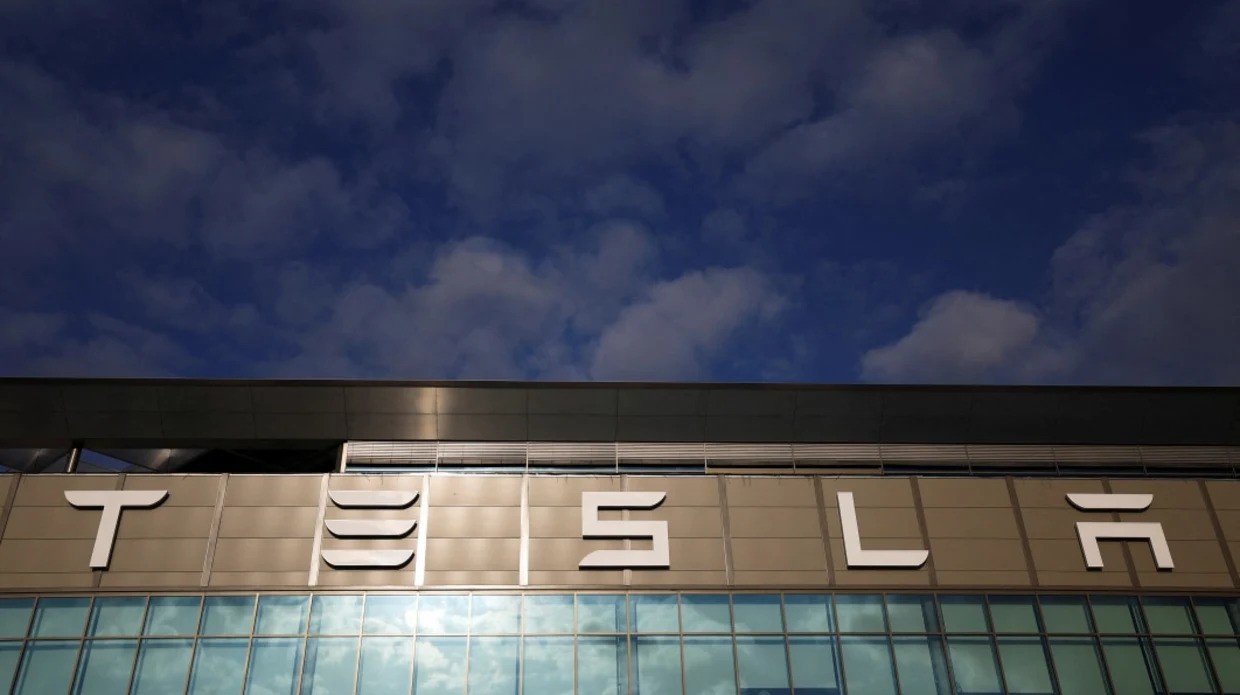
Get your Tesla Roadster with monthly payments from Bank of America


Tesla Roadster - Click above for high-res image gallery

Since Tesla doesn't release the names of most of the people who purchase one of its electric Roadsters, we can only speculate about the financial wherewithal of most of them. However, it's probably reasonably safe to assume that most of them have considerable means and are mostly paying in cash. After all, the average working stiff can't afford a $100,000+ sports car no matter how low the operating costs might be. For those that can't quite swing an upfront cash payment, Tesla is now teaming up with Bank of America to offer financing on the Roadster.

Of course, being able to get a monthly payment plan on the Roadster still doesn't make it inexpensive. Assuming an absolutely baseline Roadster at $109K, the $7,500 federal tax credit, a substantial $20,000 down payment and 7.7 percent financing, the payments on a 60-month loan would amount to $1,650 every month. Bank of America isn't specifying any terms, but you can apply online or at a Tesla store.


[Source: Tesla]

Read more →
BMW celebrates 1.5 million "new" Minis made


2009 Mini Cooper S Convertible – Click above for high-res image gallery

2009 has been a big year for BMW's MINI brand. MINI launched a new convertible, turned 50 years old, and has now made 1.5 million new generation MINIs since production began in 2001. The new MINI has outpaced the demand of the first generation MINI, which sold over 5.3 million copies from 1959-2000.

MINI's success has been a boon to BMW, as customers have been willing to pony up over $30,000 for an optioned-out MINI. The re-launch of the MINI brand has been so successful that BMW has introduced the cute little car in 80 countries. In the U.S., MINI has been a big hit, too, as 54,000 copies of the Cooper and Clubman were sold. The Oxford, England plant that produces the MINI employs over 7,000 workers and represents one percent of the island's total GDP. Hit the jump to pour over the shorter than usual BMW press release.

[Source: BMW]

Read more →

WSJ Column: Higher gas taxes better strategy than CAFE to save GM


Chevy Cruze - Click above for high-res image gallery

Ford Executive Chairman Bill Ford and AutoNation CEO Mike Jackson were just two voices that spoke out in favor of a higher gas tax earlier this year. While we took the Cato Institute's Alan Reynolds to task for muddying the waters of the "Toyota-licensed hybrid Fusion", there's reason to look deeper at his argument (published in The Wall Street Journal) which maintains that a higher gas tax isn't just a good way to encourage sensible car purchases, it also stands to be helpful in saving troubled domestic automakers like General Motors. Reynolds writes:
The federal fuel tax is highest on the most efficient fuel (diesel) and below zero on the least efficient fuel (ethanol). Cars get about 30% better mileage on diesel than on gasoline, and cars running mainly on gasoline get about 30% better mileage than they would using 85% ethanol.

To stop distorting consumer choices, simply apply the same 24-cent-a-gallon federal tax to gasoline and ethanol as we do to diesel. This would add funds to the depleted federal highway trust. More importantly, it would remove an irrational tax penalty on buying diesel-powered cars -- arguably the most cost-effective way to improve mileage without reducing car size or performance.
Since GM, already on the government dole, sells (proportionally) so many large vehicles, it will need to sell more smaller or diesel-powered vehicles to offset its truck fleet and to meet upcoming CAFE standards. Reynolds doesn't think CAFE is a good idea, and claims there's a better way to make sure GM survives. Reynolds says that a higher gas tax would allow the Detroit automaker to keep building the cars it builds best ("midsize and large sedans, sports cars, pickup trucks and SUVs"). Only by upping the gas tax and totally scrapping CAFE, Reynolds says, will GM not be forced to take even more money to survive – and to pay the CAFE fines it's sure to acquire. Doing so would also allow The General to not waste "more taxpayer money on 'retooling' to produce unwanted and unprofitable subcompacts and electric cars."


[Source: Wall Street Journal]

Featured Galleries

Find Your Next Car